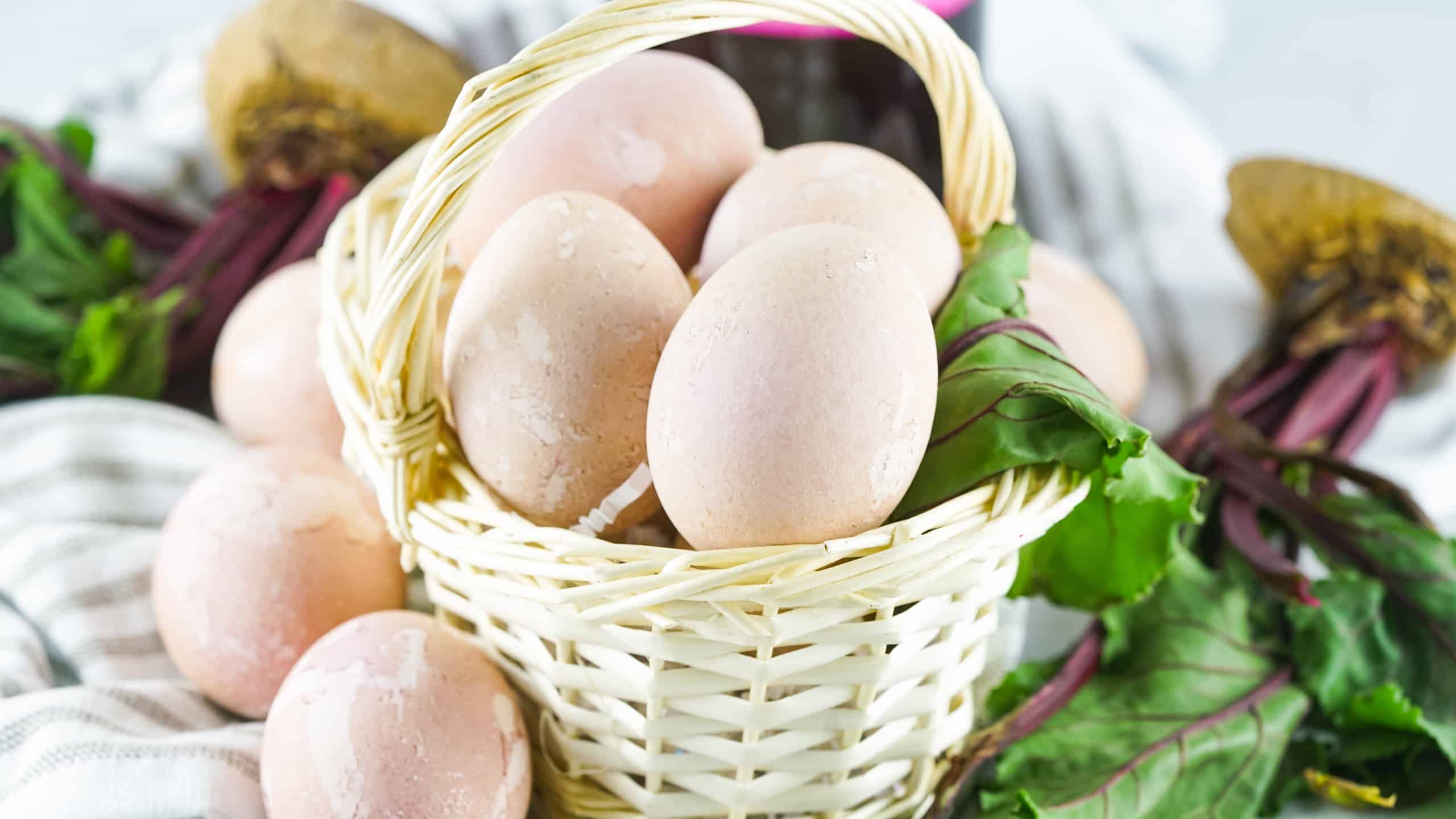
How to Dye Eggs with Beets
There’s no reason to use chemically colored Easter egg dyes when coloring eggs with your kids this year! That’s because there are a variety of natural ways to add color to your eggshells without the need for food coloring or chemical tablets at all. To add a natural pink tone to your eggs this year, why not dye eggs with beets? It’s a fun and healthy way to decorate eggs for Easter.
Print
Pin
Ingredients
- 1 Quart Water
- 2 Large Beets chopped
- 1 Cup White Vinegar
- Boiled Eggs
Instructions
- Add the beets and water to a boiling pot and let simmer for about 30 minutes.
- Strain the liquid and stir in the vinegar. Use the beet chunks for a side dish or compost.
- Add your eggs to the liquid, making sure they’re completely covered by the beet dye.
- Leave to dye until the desired shade of color is reached. I left them for about 8 hours.
- Remove the foam from the top of the bowl or dish you used to dye the eggs and discard it.
- Gently remove the eggs from the dye bowl and place them on paper towels to dry. If they have some stringy or foamy substance stuck to them, use a cup of water and let a gentle stream run over it to remove some of it. Have fun!
Notes
- Make sure to scrub and trim the beets. Since the beets will be used to tint your water, it’s essential that they start off clean. Use a soft bristled brush to scrub away all the dirt and debris from around the outside of the beets. Then trim off the excess pieces. You can also take the preparation method even further and peel the beets before adding them to the pot so that the brightly colored flesh is exposed on all sides of each piece.
- Let the eggs soak in the fridge. Since natural egg dye often takes a long time to tint the shells of your eggs, you may be worried that your cooked eggs will go bad if they sit at room temperature while they’re being dyed. If you plan on allowing the eggs to soak for the full 8 hours or more, all you have to do is place the bowl with the beet water and eggs in the refrigerator. The cold air in the fridge won’t affect they dying process.
- Carefully rinse off the foam. The beet water may foam up as the eggs soak, which is completely normal. But you may notice that the foam sticks to the eggs after they’re removed from the water. If that’s the case, carefully pour a gently stream of water over the top of your eggs to knock off the bubbles.
- Avoid wiping the eggs as they dry. When you remove the eggs from the beet dye, it’s a good idea to let them air dry. Attempting to wipe the excess liquid off the eggs may cause the dye to rub off the shell.
- Rotate the eggs as they dry. To ensure all your eggs dry evenly, try rotating the eggs every few hours so the air hits all sides of the shell. You may need to replace the paper towels with clean ones as you rotate to ensure that the eggs dry completely.
- Use the beets in your favorite recipe. There’s no reason to let those beets go to waste after you’re finished boiling them! Instead of tossing them, try adding them to your favorite beet recipe to ensure all the ingredients in your natural egg dye don’t go unused.