Becoming an Ironman
This is Part 3 of my story. If you're just joining: Part 1 was the girl at the YMCA pool and the dream that waited thirty years. Part 2 was the crash seven weeks before Ironman Mont Tremblant - and a broken arm I'd been training on without knowing it. I had decided to race anyway. Proceed as if success is inevitable.
This is what happened when I got there.
At 3:45 on race morning, I was up making coffee. I went through my special needs bags one more time and waited to feel nervous. I never did.
My goal that day was simple: finish. I had lost two key weeks of training after the crash, then four weeks of swimming while the fracture in my shoulder healed. Just getting to the start line felt like a win. But somewhere underneath the doubt, I knew I would cross that finish line before midnight.
One of the messages waiting on my phone that morning said: The path that led you to today was meant to be. I teared up reading it. That path had been so hard for two months.
I kissed my sleeping kids goodbye, quietly thanked them for putting up with all of it, and walked down the cobblestone streets of the village with hundreds of other athletes. At transition, I checked my tires. Then I checked them again. Then once more. I had been oddly obsessed with the idea of getting a flat. Looking back, I'm still not sure if that was nerves or a premonition.
The Swim
I had bought a sleeveless wetsuit two weeks before the race to keep pressure off my right shoulder. A good friend who is also my chiropractor, and a phenomenal athlete, had helped me work out a modified stroke for that arm. It wasn't pretty. But I knew I could finagle my way through 2.4 miles with it.
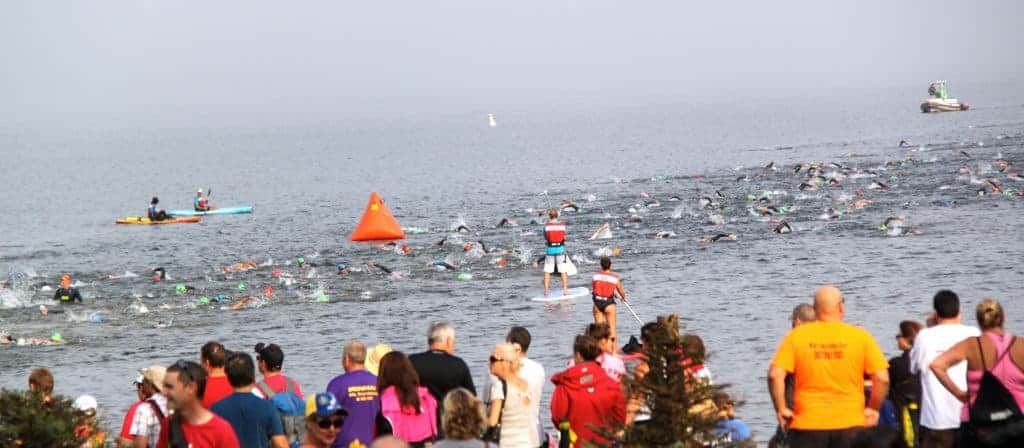
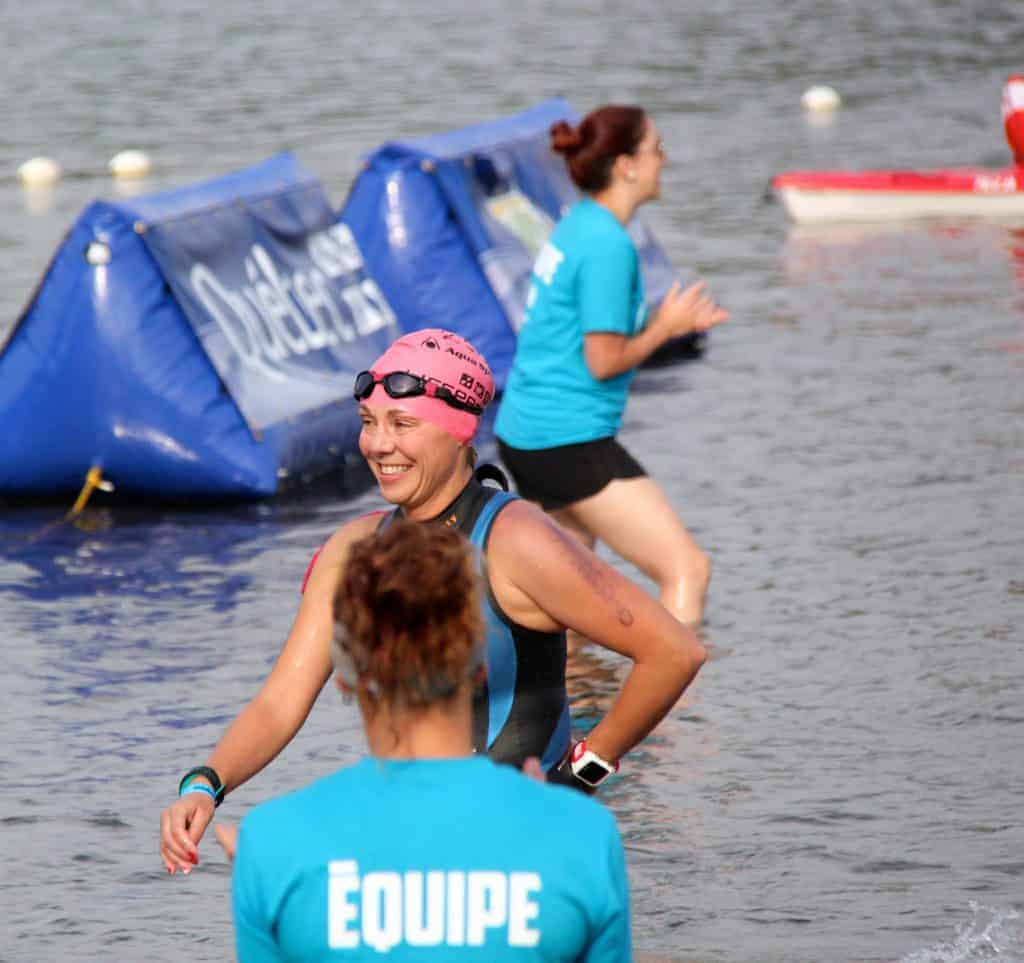
I was in the last wave. When the gun went off, I walked slowly into Lac Tremblant, clear and 71 degrees, mountains all around, and just watched the chaos unfold. The woman beside me laughed and said, "I guess we need to start swimming at some point." So I put my head in and swam.
Partway out, a hand grabbed my shoulder hard. A woman, pale and panicked, was saying, "I need help, I need help." I yelled for a kayak and waited until she had a hold of it before I moved on. I still think about her and hope she finished.
There were thirty buoys on that course, numbered. For someone whose sighting skills are a C-plus at best, that was a gift. I counted them out and counted them back, and somewhere along the way I got so caught up in the beauty of it that I forgot my arm was broken. Then it started to burn, and I remembered. I switched back to the modified stroke and let my left arm do the work.
When I stood up in the shallows, I heard my husband yelling my name and saw my kids cheering. It was the slowest open water swim I have ever done, and the best one. My watch said I'd swum 4,525 yards, a good bit more than 2.4 miles, thanks to staying on the outside to protect my shoulder. I laughed at myself and ran to T1.
The Bike
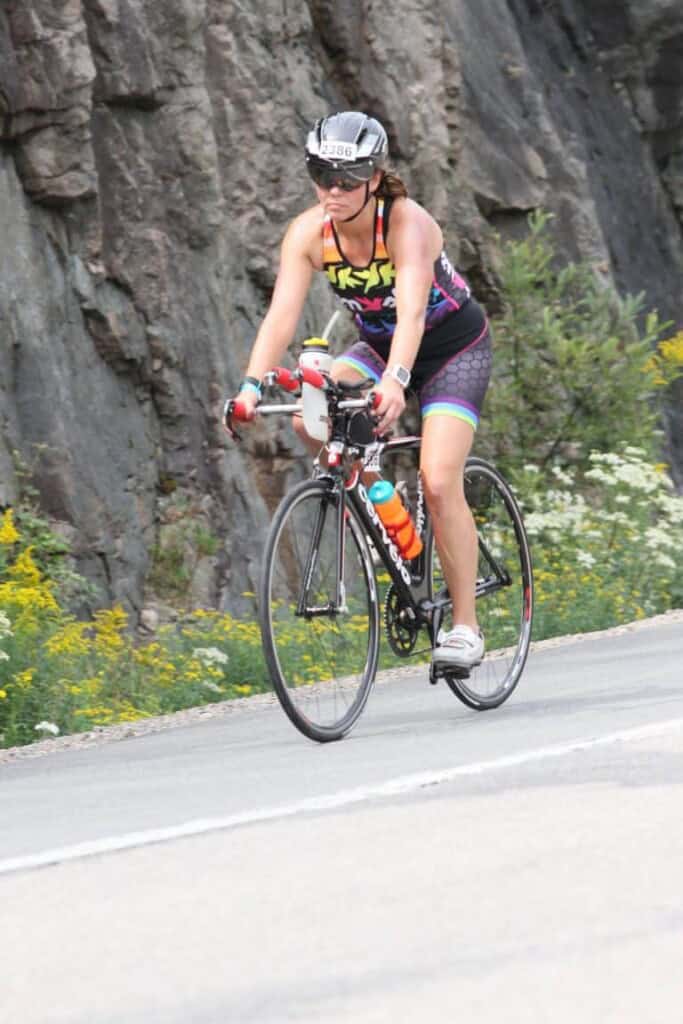
The bike was going great. Smooth roads, closed to traffic. A medical volunteer slathered me in the sunscreen I'd forgotten. At one aid station, a boy with a hockey stick was shooting the empty bottles riders tossed into a hockey net. My son played hockey. He would have loved that job.
Then, heading into the hardest section of the first loop, coasting down a hill, my chain fell off.
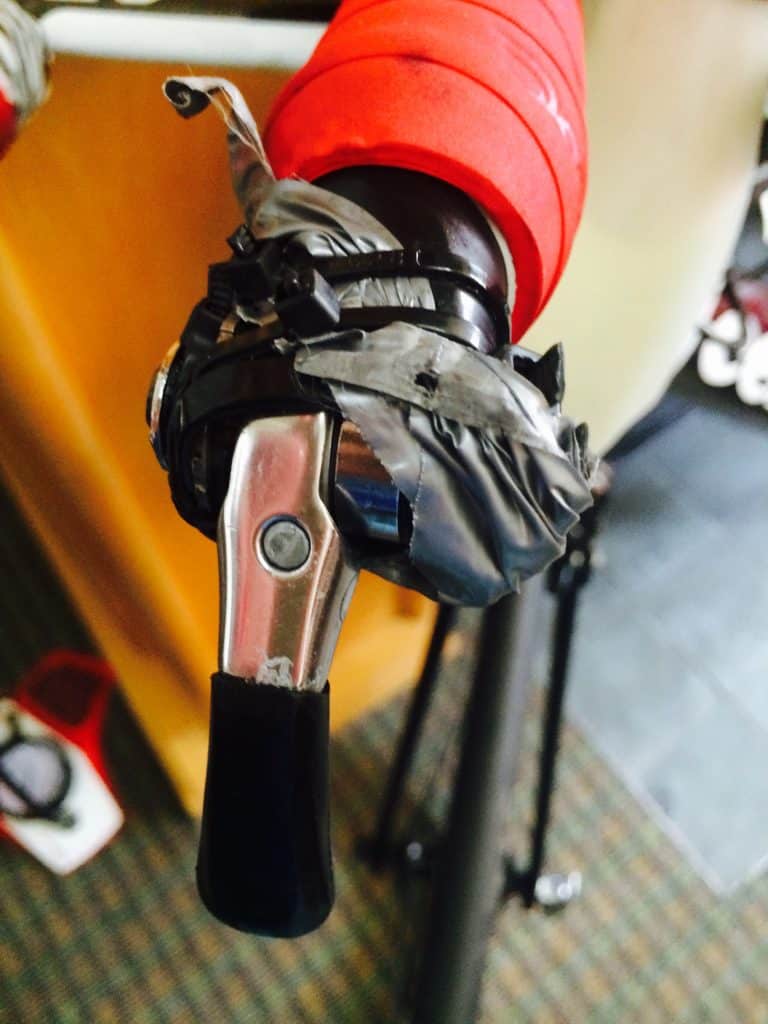
I put it back on. It fell off again. When I looked closer, a piece of my shifter was gone.
A volunteer flagged down bike support. I walked my bike across the course, cyclists flying past, to wait on the grass while the mechanic looked it over. He shook his head. It was a special part. He didn't have it. "I'm so sorry," he said. "There's nothing I can do."
Another volunteer asked if he could take my bike.
Everything slowed down. I pictured walking that broken bike back through the cheering crowds to find my family and tell them I was done.
I couldn't do it. I told the volunteer no.
The mechanic was already getting back on his motorcycle. I grabbed him and asked if there was anything, anything at all, he could do to make it work. He thought about it and said he could lock my gears so I'd have one to use. "It will be very hard on this course."
I didn't care.
It was very hard. On the first climb, standing on my pedals and grinding, a pro rider passed me and yelled, "Use your gears!"
"I don't have any!" I yelled back.
I walked up the next steep hill. At the top, I saw a different mechanic and waved him down like my life depended on it. He told me the same thing as the first one: a special part, nothing he could get on race day. Then he paused. "Let me think for a minute."
He dug through a backpack of odds and ends, and with zip ties and duct tape, he built me a new piece of shifter right there on the side of the road. It didn't give me all my gears, but it gave me the middle range. He warned me not to shift too high or too low, or it would snap.
I thanked him about ten times and got back on.
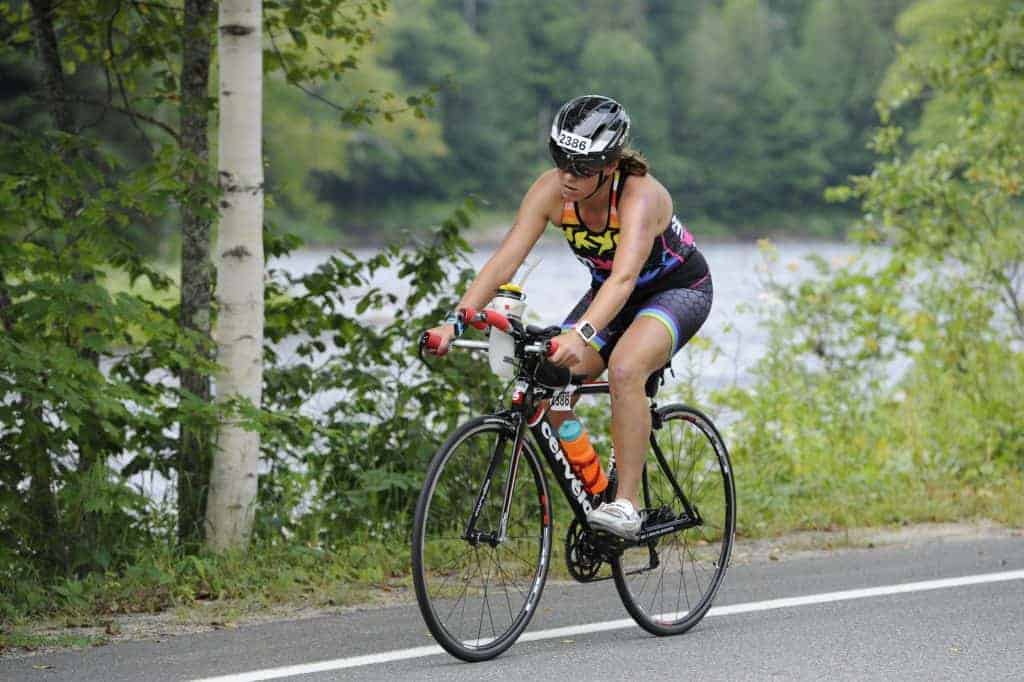
Between the two mechanics, I had lost more than forty minutes. Now I had a new fear: the bike cutoff. My GPS data was a mess, so I spent the entire second loop doing math in my head. How fast do I need to go to make it? I was alone a lot out there, and I'll be honest, I was not in a good place. I talked to myself the whole way, and most of it was some version of someone out there just does not want me to finish today.
I ground up the long climbs without my easy gears. I walked the steepest hills. With three miles to go, my legs were fried, I was crying, and I was walking my bike up one more hill. Then I got back on, flew down the other side, and heard the crowd at T2.
I made the cutoff with a little over thirty minutes to spare.
The Run
When I handed my bike to the volunteer, I came very close to telling her she could put it in the dumpster.
Would you like to save this?
My legs didn't feel like legs. I saw my husband and kids behind the fence and walked over to them, and while I was standing there, I heard the announcer tell the entire crowd that I had just finished the swim and the bike with a broken arm from a crash seven weeks earlier. People started cheering and holding out their hands for high fives. It was surreal.
In the changing tent, I realized my hands were completely numb from gripping those shifters so hard, trying to make them hold. I couldn't put my own shoes on. A kind volunteer did it for me and pulled my laces tight. At the time, I blamed the shifters. Now I think all those hours in aero, with the pressure on my neck, were probably part of it too.
I had spent eight months learning to ride efficiently for one reason: so I could get off the bike and run. Not walk the marathon. Run it. Brick workout after brick workout, and every one had gone well.
Within the first two miles, I was walking.
A man next to me said, "Hey, we're going to be Ironmen today no matter what, even if we have to walk this marathon." I smiled at him and wanted to cry. That was the last goal I had left, and it was gone. So I said to myself: You have six hours and forty-five minutes to finish a marathon. You had big obstacles thrown at you today. Get over it and move on, so you can finish this race proudly.
It was 90 degrees. I dumped water over my head at every aid station and chewed ice. My nutrition plan was gone, and Coke became my fuel. At one point, I realized how much plain water I'd been drinking, and the nurse in me thought hyponatremia. So around mile 10, I had a cup of chicken broth. In 90-degree heat. It was delicious.
Coming back through the village, I could hear the announcer calling other people across the finish line. The streets were full of people cheering my name. I was depressed. I wanted to be finishing now. I had worked so hard to finish now.
And then I saw my family again. My kids were so excited. I stopped and kissed every one of them, and something in me turned around. I thought about what they might take from watching their mom do this. It was 8:15, and I had thirteen miles to go before midnight. It was going to happen, and I decided I was going to enjoy it, even if it wasn't the day I had trained for.
I stopped doing the math.
The second loop got dark and quiet. Volunteers handed out glow necklaces, and one put mine on for me because my hands were still tingling. Part of the course ran along a trail lit with glow sticks in the trees, like Halloween. I fell in with a woman who was struggling too, and we made a game of it: run to the next streetlight, walk, run to the next one. "Run to the light!" I'd say, and she'd laugh. Two more injured athletes joined us. We were all out there in those last hours, a group of stubborn people who were going to finish.
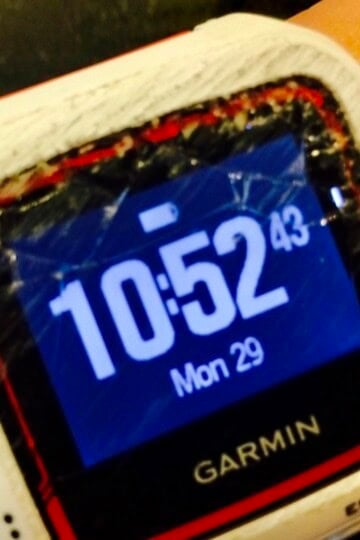
At 25.2 miles, I turned on my watch's backlight and saw one mile to go.
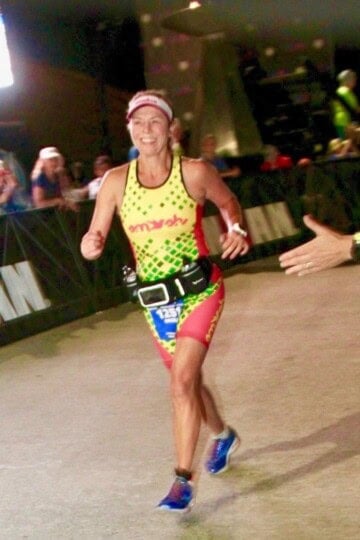
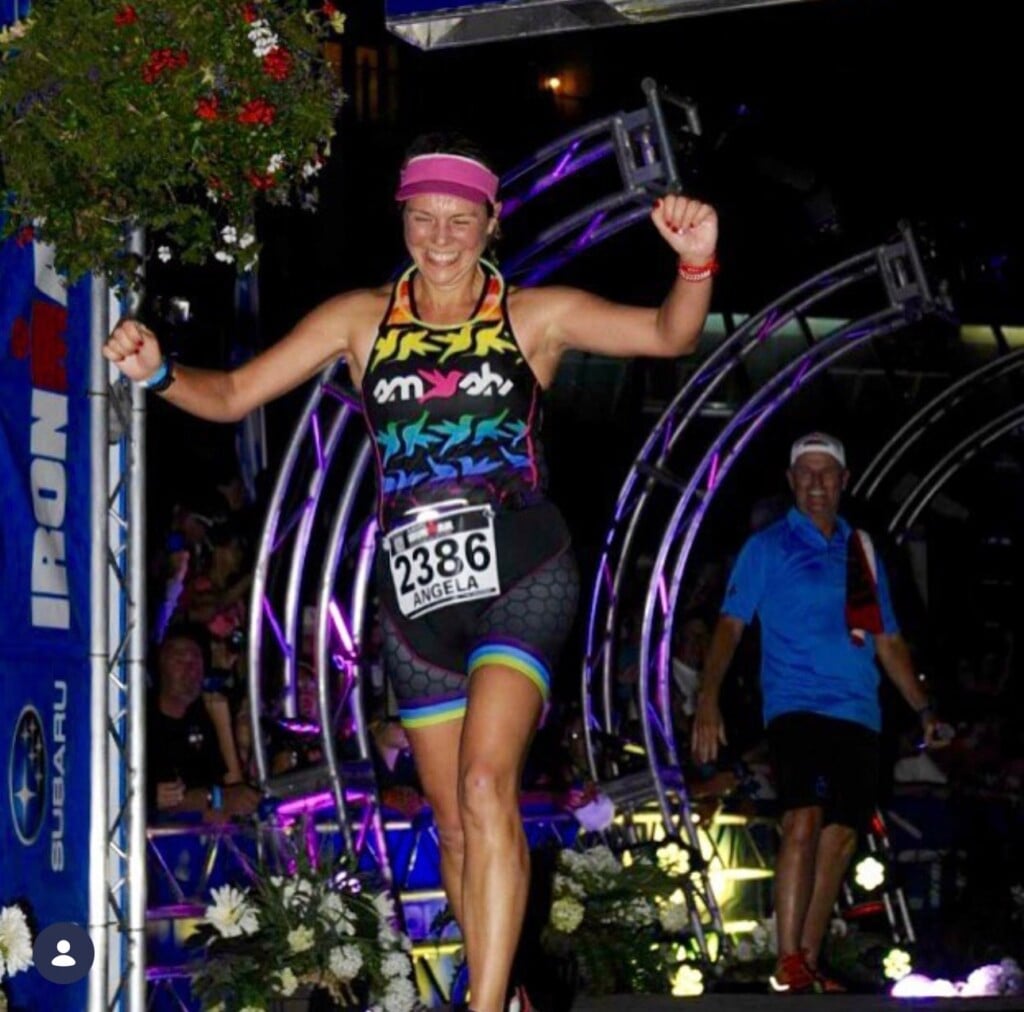
It was eleven o'clock at night, and the village was electric. People lined the streets, calling my name and slapping my hand as I went by. I had carried this dream since I was thirteen years old, and I was about to finish it.
Then I heard it: "Angela... you are an IRONMAN!"
Sixteen hours and twelve minutes, give or take a few seconds. About forty-eight minutes to spare.
What That Day Taught Me
I didn't have the race I trained for. I had the race I got. Here's what I carried out of it:
Don't accept the first no. The first mechanic said there was nothing he could do. If I had believed him, my day would have ended on the grass beside that road.
The day you planned isn't always the day you get. Finish anyway. My last goal fell apart two miles into the run, and I still crossed the line proud.
Break it into pieces. When the whole thing is too big, run to the next light.
You don't finish alone. Two mechanics, a volunteer tying my shoes, strangers in the dark, and
my family showing up at exactly the moment I was sinking.
Proceed as if success is inevitable. I wrote that line before the race. That day is the reason I still believe it.
And one more, which isn't really a lesson so much as who I am: quitting was never an option. Not on that bike, not on that run. That part of me hasn't changed.
Three Years Later
I went back to the start line once more, at Ironman Lake Placid in 2018. It was a different kind of hard. No broken bones this time, but a year when I barely wanted it: missed workouts, low motivation, a lot of doubt.
The swim was the roughest open water swim of my life, with kicks, grabs, and a foot to the eye. The bike course threw thunder, rain, and fierce wind at me. By the time I got off the bike, I was so foggy that I walked out of transition holding a Coke and a bag of salt-and-vinegar chips, briefly forgetting I was in a race.
My family was volunteering at the first aid station on the run. My son showed me how he'd figured out how to hold four cups of water at once. I was sick to my stomach for most of the marathon, and for the first time in all my years of racing, I actually thought, I don't really need to finish this today.
Then the sun started to set over River Road, and that thought turned into a different one: I am so damn lucky to be doing this.
At the top of the last big hill into town, a man with a megaphone said, "Angela... you are in a race... I don't know how to tell you this, but it's time to run." So I ran. Into the Olympic Oval, through the cheers, crying and smiling, until I heard my name one more time.
"Angela Campos, you are an Ironman!"
If you followed this page back then, this is the version of me a lot of you first met. The one who didn't quit.
A year later, I would stand at one more Ironman start line, in Chattanooga. It was the last race I ever wrote about, and the only race of my life I didn't finish.
- Angela
Coming soon: Part 4: The Unraveling.